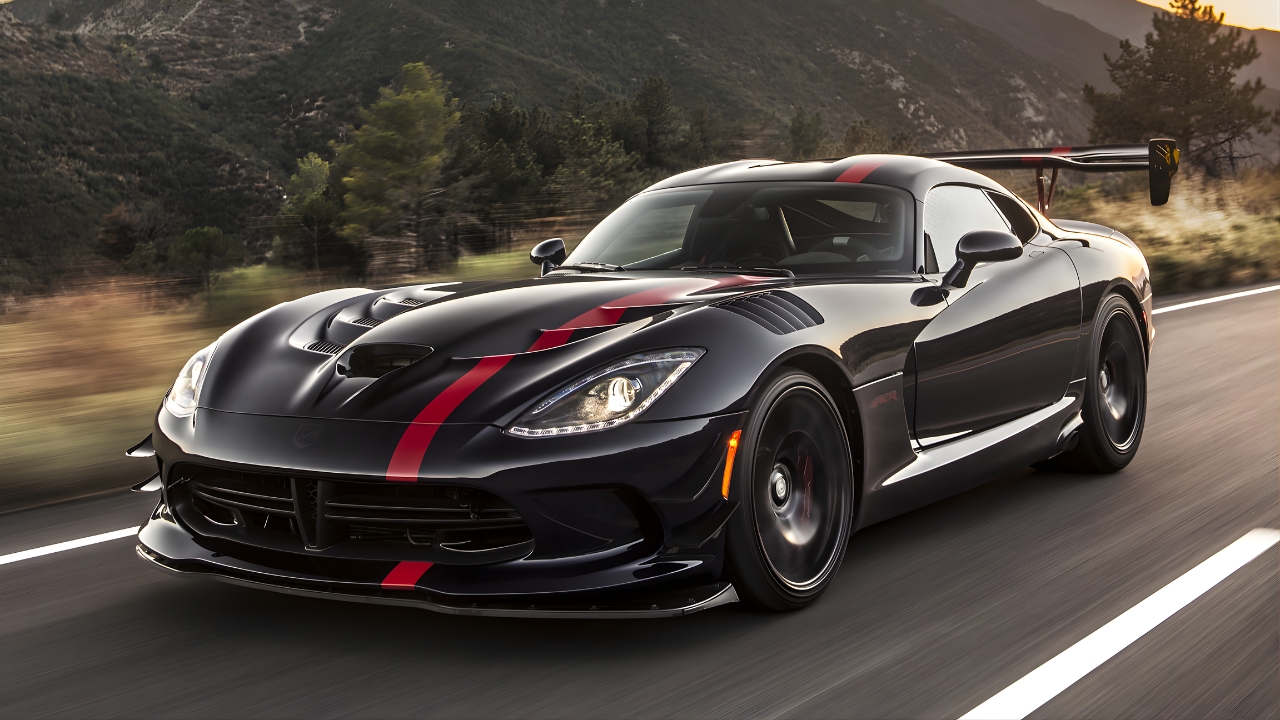
The Dodge Viper has always been one of those cars that refuses to be forgotten. Even years after production ended, its long hood, side-exit exhausts, and brutally raw driving experience still live rent-free in the minds of enthusiasts. It wasn’t refined or polite. It was loud, aggressive, and unapologetically American. Now, whispers across the auto industry suggest that this legendary nameplate could make a dramatic return as the 2026 Dodge Viper.
While Dodge hasn’t confirmed anything publicly, mounting rumors, insider hints, and shifting market trends point toward the possibility of a new flagship performance machine. And if the Viper does come back, it likely won’t be a simple throwback. It could be a modern supercar built to challenge the world’s best while honoring its wild roots.
What Is the 2026 Dodge Viper and Why Fans Are Excited
The Viper was never just another sports car in Dodge’s lineup. It was the halo car, the one that existed purely to push limits. From its massive V10 engine to its barely tamed handling, it delivered an experience that felt closer to a race car than a daily driver.
When Dodge discontinued the model in 2017, many believed the era of big, analog American supercars had ended for good. But today’s performance landscape is changing again. Buyers are showing renewed interest in high-horsepower machines, and brands are investing heavily in electrified performance. That creates the perfect moment for Dodge to revive a legend with modern technology.
For enthusiasts, the idea of a reborn Viper isn’t just exciting. It feels overdue.
A Modern Design With Classic Viper Attitude
If the Viper returns, expect it to look just as dramatic as ever. Early renderings and design predictions suggest a lower, wider stance with sharper lines and deeper aerodynamic cuts. The classic long-hood, short-cabin proportions are likely to stay, preserving the car’s unmistakable silhouette.

Up front, the new model could feature slim LED headlights and massive air intakes to cool whatever powerhouse sits under the hood. A sculpted body, aggressive side vents, and a muscular rear end would give it the presence of a true supercar rather than a traditional muscle car.
The goal would be clear: keep the Viper’s raw, intimidating personality while refining it with modern aerodynamics and precision.
Life After the V10: New Powertrain Possibilities
The biggest question surrounds the engine. The old naturally aspirated V10 was legendary, but modern emissions standards make its return unlikely. Instead, Dodge may explore alternative solutions that still deliver outrageous performance.
One possibility is a high-output twin-turbo V8 capable of producing supercar-level horsepower. Another is a hybrid-assisted setup that uses electric torque to fill gaps in acceleration. Instant electric boost could make the new Viper quicker off the line than ever before while keeping overall efficiency in check.
Either way, power figures well above 600 or even 700 horsepower wouldn’t be surprising. Dodge has always chased big numbers, and a flagship Viper would need to compete with elite European rivals. There’s also hope that a manual transmission option could survive, giving purists the hands-on driving feel that defined the original.
Lighter, Faster, and More Track-Ready
Modern performance isn’t just about engine output. It’s also about weight, balance, and control. The 2026 Viper is expected to use a lighter chassis, possibly incorporating aluminum or carbon-fiber components to improve strength while reducing mass.

A stiffer structure combined with advanced suspension tuning could transform the car into a true track weapon. Expect adaptive dampers, high-performance brakes, and clever aerodynamic features to improve stability at speed.
This wouldn’t just be a straight-line monster. It could be a precise, corner-carving machine capable of setting serious lap times. An even more extreme ACR-style version focused purely on track performance would fit perfectly with the Viper’s history.
A Cabin That Balances Raw and Modern
Inside, the new Viper would likely walk a fine line between minimalism and modern tech. The original models were famously bare-bones, but today’s buyers expect more comfort and connectivity.
A digital instrument cluster, performance telemetry displays, and a streamlined infotainment system could be integrated without cluttering the cabin. Lightweight sport seats, quality materials, and a driver-focused layout would keep the emphasis on performance.
The experience should still feel intimate and intense, like you’re strapped into a machine built for speed rather than luxury.
Pricing and Timing Expectations
Industry speculation suggests Dodge might reveal a concept or prototype as early as late 2025, with production following in 2026. Pricing would likely place the Viper firmly in supercar territory, potentially starting in the mid-six-figure range depending on configuration. Special editions and track-focused trims could climb even higher.

If it happens, the Viper would once again serve as Dodge’s ultimate performance statement.
Final Verdict
A 2026 Dodge Viper revival would mark one of the most exciting comebacks in modern automotive history. By combining aggressive design, cutting-edge engineering, and electrified power with the brand’s unmistakable attitude, Dodge could create a supercar that honors the past while embracing the future. Until an official announcement arrives, the legend remains a rumor, but it’s a rumor that has performance fans watching closely.
